
The Format That Outlasted Everything

Every morning, I open my RSS reader before I open anything else. Twenty-seven blogs and websites in my feed, with no ads or promoted content between the posts, and no accounts I never followed showing up because someone paid for visibility. I read what I subscribed to in the order it was published. Simple as that.
That sounds like it should be the default. It used to be, but not anymore.
I've been using RSS feeds since around 2007. I'm not exactly sure when, but I remember it was a few months after Google Reader launched. I heard about RSS from some friends who were studying computer engineering, and at the time the concept itself felt amazing. A way to curate my own news, like a custom newspaper. I used Google Reader for years, and it was the best way to follow independent writers and small websites. That lasted until Google decided to be Google and shut it down in 2013. The official explanation was a decline in users and usage, but it had over 30 million active users at the time. A petition to save it gathered 100,000 signatures in a matter of days, and Feedly gained 3 million new users in the two weeks after the announcement, all of them migrating from a product Google claimed nobody wanted.
The more likely explanation is that an open reading format with no ads and no data collection didn't fit a company that runs on both. Google had been pulling engineers off the Reader team to work on Google+, their own social network where they could control the social layer and feed user data into their ad products. Google+ never reached the scale they needed (despite the use of brute-force adoption), and they shut it down in 2019.
RSS, on the other hand, is still here.
I moved to Feedly permanently a couple of months before the shutdown, back in the spring of 2013, right after Google announced on 13 March that Reader would close for good on 1 July. Millions of us made the jump, with Feedly alone picking up over 500,000 users in the first 48 hours after the announcement. For the first few years it felt outstanding: a clean and modern interface, fast syncing, a solid replacement for something that should never have needed replacing. Then Feedly started changing. They launched the Pro plan just months later in August 2013, putting advanced search behind a $5 paywall, and over time more and more features followed: AI summaries, faster updates, and team tools. Core functionality that used to be free slowly became restricted, with tighter limits on the number of sources and folders even for basic users. The product kept growing in ways that served Feedly's business more than my reading habits. And there's the privacy question too. They publish a policy, but it stays quite high-level about what they actually do with the data in my account, what they track, or what they share with partners. That uncertainty alone is enough to make me uncomfortable.
The pattern repeats: a platform launches, gains trust, accumulates users, and starts extracting value from them. Google did it with Reader by killing it. Feedly did it by walling off or restricting what used to be free. Social media platforms do it by replacing your feed with their “curated” version full of ads, bot accounts, and promoted posts. If I follow a small developer writing about their work, their posts disappear under all that noise. In most platforms I can't rearrange anything or filter anything. The feed belongs to the platform.
RSS as a format never did any of that. The specification hasn't changed to serve advertisers. No company controls it, and no one can shut it down the way Google shut down Reader, because no one owns it. Every reader I've used has let me down in some way, but the format hasn't.
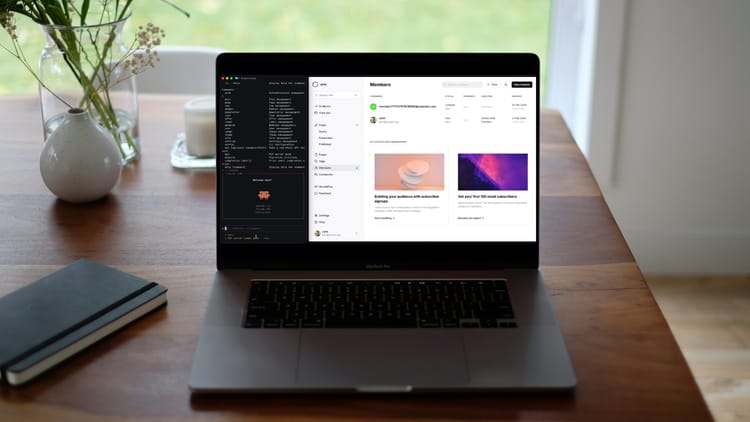
John O'Nolan shaped a lot of my thinking on the infrastructure side of this. He built Ghost as an open platform for independent publishers, and he's now building Alcove, an RSS reader designed around the same principles: reader-first, no tracking, no algorithmic sorting. His work made me pay closer attention to the “plumbing” behind how I consume and distribute content. I'd been tolerating broken models because every major platform used the same one. Seeing someone build a real alternative made the problem harder to ignore.
I publish my own blog with RSS as the primary distribution channel. Email subscribers get posts through Ghost's built-in newsletter, and Ghost also has ActivityPub built in, so new posts go out to the Fediverse automatically (optional feature). Social media is secondary. I share links on X, Threads, and LinkedIn, but I think of those as pointers, not the destination. If someone reads what I write, I want them reading it on my site or in their own feed reader, not on a platform that wraps it in ads and recommended content from strangers.
This connects to a broader set of choices I've been making. I moved to open-source tools more than 10 years ago. I chose a local-first knowledge management app, and I run my blog on Ghost instead of a platform that controls distribution. RSS fits the same pattern: I want to own the relationship between my content and the people who read it. No intermediary gets to tax that connection with ads or bury it under algorithmic crap.
Right now I'm using FeedFlow, an open-source RSS reader that runs on all my devices. It collects no data and costs nothing. It fits the same criteria I apply to every tool in my stack. I'm still watching Alcove's development closely, because O'Nolan is building it with the same reader-first, indie web thinking that shaped Ghost. Having more open-source readers built on those principles is good for everyone.
Companies built products on top of RSS, extracted what they could, and either shut them down or locked them behind paywalls. The open standard underneath kept doing what it always did: deliver what I subscribed to, nothing more, nothing less. The format outlasted everything.
Twenty years from now (if I'm still here), I expect to still be opening it every morning.
May The Code Be With You! 🚀



Member discussion